产品详情
产品名称Hepcidin Rabbit mAb
克隆号JA11-27
来源种属Recombinant Rabbit
克隆性 Monoclonal antibody
纯化ProA affinity purified
应用WB, IHC
种属反应性Human;Rat
免疫原描述recombinant protein
标记Unconjugated
别名Hamp antibody
HEPC antibody
HEPC_HUMAN antibody
Hepc20 antibody
Hepc25 antibody
Hepcidin-20 antibody
HFE2B antibody
LEAP-1 antibody
LEAP1 antibody
Liver-expressed antimicrobial peptide 1 antibody
PLTR antibody
Putative liver tumor regressor antibody
数据库入口号Swiss-Prot#:P81172
Uniprot
P81172
计算分子量3 kDa
配方1*TBS (pH7.4), 1%BSA, 40%Glycerol. Preservative: 0.05% Sodium Azide.
保存Store at -20˚C
应用详情
WB: 1:500-1:1,000
IHC: 1:50-1:200
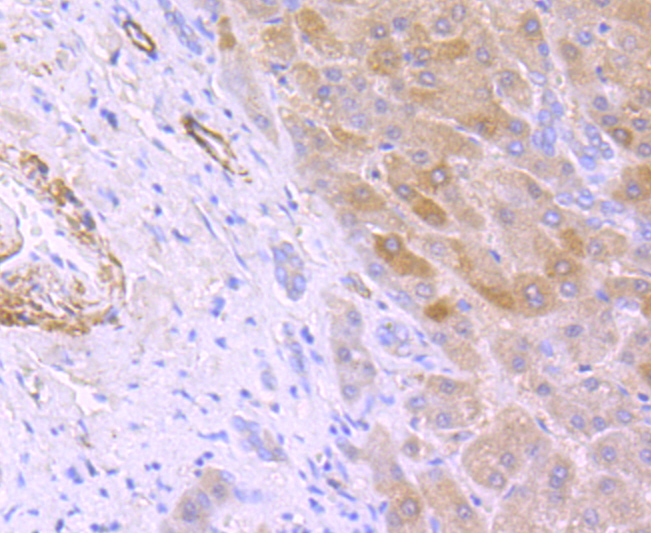
Immunohistochemical analysis of paraffin-embedded human liver tissue using anti- Hepcidin antibody. Counter stained with hematoxylin.
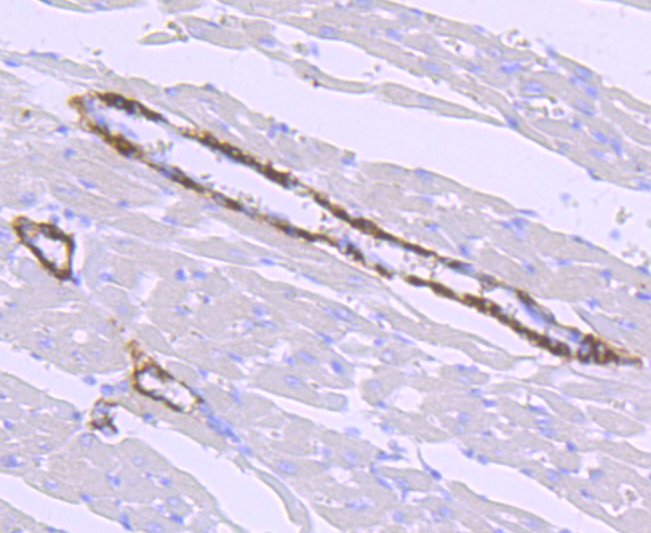
Immunohistochemical analysis of paraffin-embedded rat heart tissue using anti- Hepcidin antibody. Counter stained with hematoxylin.
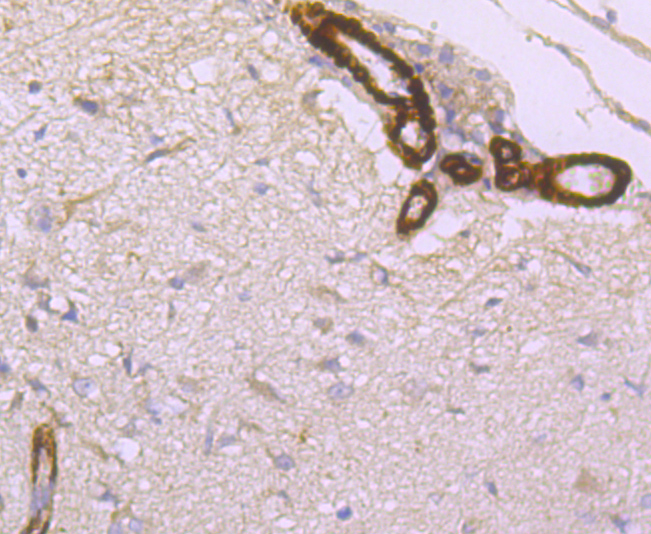
Immunohistochemical analysis of paraffin-embedded rat brain tissue using anti- Hepcidin antibody. Counter stained with hematoxylin.
Hepcidin, also known as HAMP, HEPC, LEAP1 or HFE2B, is an 84 amino acid secreted protein that regulates iron-related signaling events. Highly expressed in liver with lower expression in heart, brain, lung, prostate and thyroid, hepcidin is thought to maintain iron homeostasis and, in conjunction with the HFE protein (a protein that is defective in hereditary hemochromatosis), may mediate both iron storage in macrophages and intestinal iron absorption. Additionally, hepcidin has strong antimicrobial activity against gram-positive and gram-negative bacteria, as well as certain yeast strains, suggesting that hepcidin may play a crucial role in staving off bacterial infections. Defects in the gene encoding hepcidin are the cause of hemochromatosis type 2B (also known as juvenile hemochromatosis), an early-onset autosomal recessive disorder that results in severe iron overload and is characterized by hepatic fibrosis, hypogonadotrophic hypogonadism and cardiomyopathy.
如果您使用该产品49534发表了文章,请通知我们,让我们可以引用您的文献。
et al,Vitamin D supplementation ameliorates anemia of inflammation by reducing hepcidin levels and inactivating inflammatory signaling pathways
, (2025),
PMID:
40850189



 Yes
Yes